The short answer
Shoot sunsets on the west and north coasts (Stone Town, Kendwa, Nungwi), sunrises on the east coast (Matemwe to Jambiani), and plan around the two rain seasons, roughly March to May and October to December. Check a tide table before any east coast shoot, ask before you photograph people, dress modestly in Stone Town, and do not bring a drone without permits from the Tanzania Civil Aviation Authority.
Where is Zanzibar, and which island do photographers mean?
Zanzibar is part of the United Republic of Tanzania, and its two main islands are Unguja and Pemba. When people say “Zanzibar” they usually mean Unguja, the island with Stone Town, the north coast resorts, the east coast lagoons and Jozani forest. Everything in this guide is on Unguja.
Unguja lies just south of the equator, off mainland Tanzania, and ferries link it with Dar es Salaam. The island runs roughly north to south, which matters more to a photographer than almost anything else here: one long coast faces the sunrise and the other faces the sunset. Stone Town is on the west coast, Nungwi and Kendwa are in the north, and Paje, Jambiani and Jozani are in the south. One planning note: the Canadian government says foreign visitors must buy mandatory travel insurance from a designated national insurer, which for arrivals in Zanzibar is the Zanzibar Insurance Corporation.
When is the best time to visit Zanzibar for photography?
Unguja gets two rain seasons a year, according to the Tanzania Meteorological Authority (TMA): the long rains, called Masika, from about March to May, and the short rains, called Vuli, from about October to December. The months outside those windows, June to September and January to February, fall between the two rain seasons.
Rain is not a reason to stay home. Storm light over the sea, wet streets in Stone Town and green forest at Jozani all photograph well; the cost is flexibility. TMA publishes an outlook before each season, and the 2026 one matters. It expects a Vuli strongly influenced by El Niño, with normal to above normal rain over the northern coast, which includes Unguja and Pemba, starting in the first or second week of October and possibly running into January 2027. For a late 2026 trip, build in spare days.
| Months | Season | What it means for photos |
|---|---|---|
| January to February | Between the rains | Outside both rain seasons; Ramadan 2027 is expected to start on or around 7 February |
| March to May | Masika, the long rains | Expect rain; dramatic skies, fewer clear sunsets, green forest |
| June to September | Between the rains | Outside both rain seasons; plan sunrise and sunset shoots |
| October to December | Vuli, the short rains | Showers and storm light; TMA forecasts normal to above normal Vuli rain in 2026 |
Which side of Zanzibar gets sunrise and which gets sunset?
The east coast (Matemwe, Paje, Jambiani) faces the sunrise over the open Indian Ocean. The west coast, including Stone Town and Kendwa, faces the sunset. Nungwi, at the northern tip, can see both depending on where you stand. Pick your base by the light you want most.
Close to the equator, the times barely move. Sunrise falls between about 5:55 and 6:35 am and sunset between about 6:15 and 6:50 pm, local time (three hours ahead of UTC). Civil twilight lasts a little over 20 minutes, so be set up before the sky changes.
| Time of year | Sunrise (approx.) | Sunset (approx.) | Where to be |
|---|---|---|---|
| Mid January | 6:20 am | 6:45 pm | East coast at dawn, Kendwa or Stone Town at dusk |
| Late June | 6:30 am | 6:15 pm | Shortest days; plan midday around shade |
| Early November | 5:55 am | 6:15 pm | Earliest sunrises; Vuli showers likely |
| Late December | 6:05 am | 6:35 pm | Longest days; showers possible into January |
Midday sun is high and hard. Use those hours for shaded lanes, forest walks and scouting, and save open beaches for the first and last two hours of daylight.
 Moonlight Over the Ocean at Night by Largephotos Team
 Calm Lagoon Lined with Palms by Largephotos Team
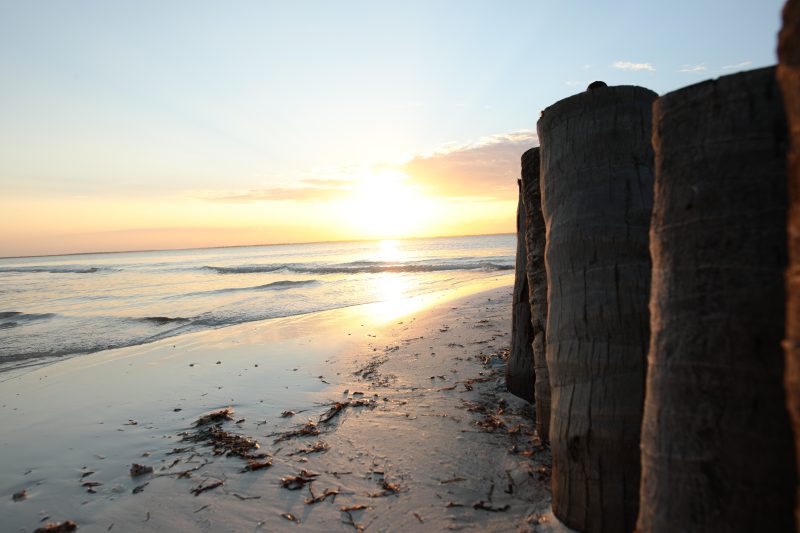 Sunset Beach Behind a Palm Log Seawall by Largephotos Team
 Sunset Over the Indian Ocean by Largephotos Team
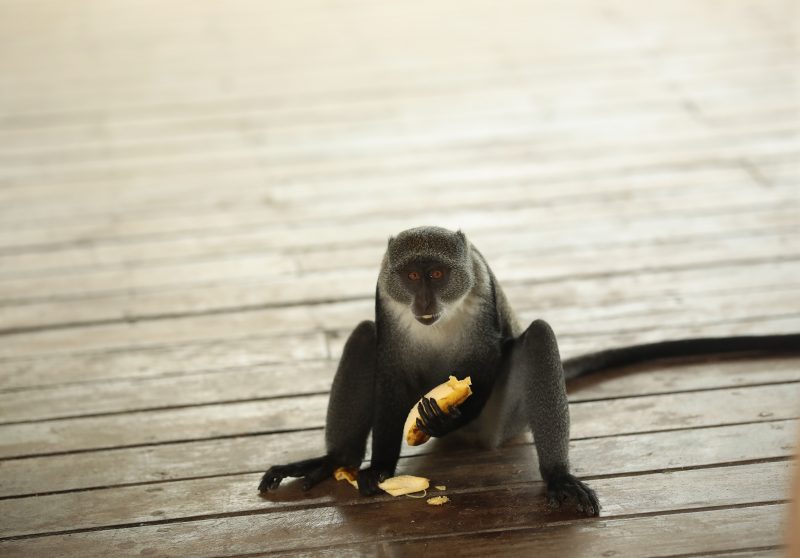 Monkey Eating a Banana on a Wooden Deck by Largephotos Team
 Wooden Steps Down to a Turquoise Lagoon by Largephotos Team
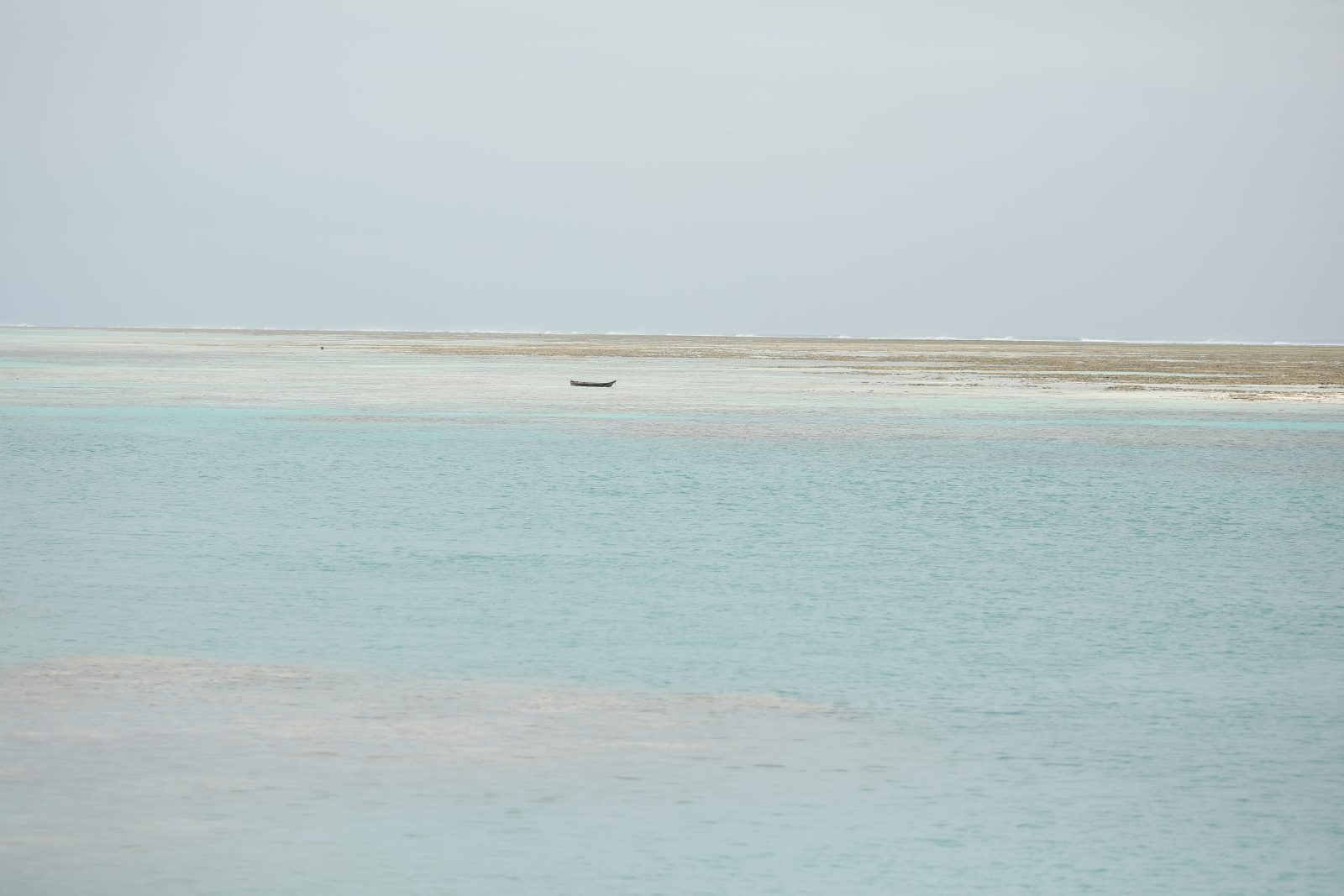
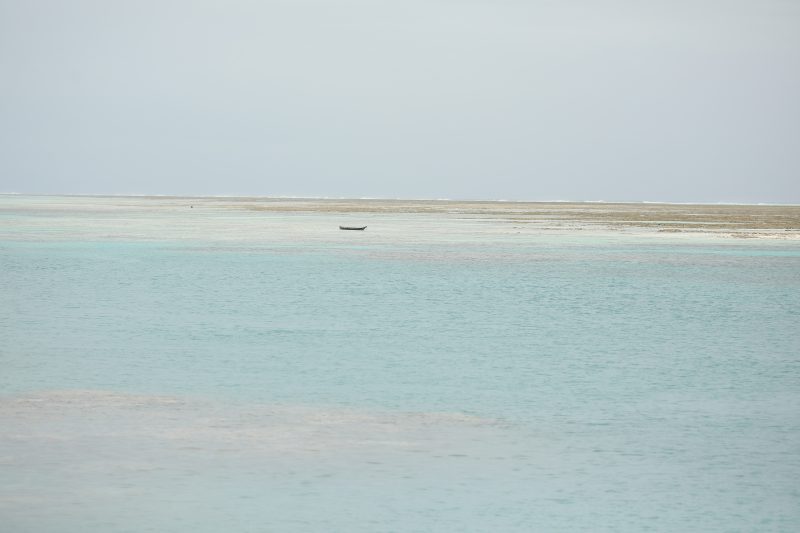 Turquoise Shallows Stretching to the Horizon by Largephotos Team
 Walking the Beach at Low Tide by Largephotos Team
 Palm-Lined Shore on a Grey Morning by Largephotos Team
See all 13 free Zanzibar photos
The grid above comes from the Zanzibar topic page, where the Largephotos Team has shared resort pools, beaches, lagoon steps, palms and animals. All are free under CC0; the license page explains the one extra Largephotos site rule.
Which Zanzibar beaches are best to photograph?
For sunsets, look north: Nungwi at the tip and Kendwa just south of it on the west side. For sunrises and low tide flats, look at the east coast from Matemwe down to Paje and Jambiani. Plan the light and the tide together before you book a room.
Kendwa faces west, so the sun drops into the sea in front of you and boats and swimmers become silhouettes. Nungwi wraps around the tip and gives a choice of angles. On the east coast, sunrise comes up out of the open ocean, and low tide exposes the flats where seaweed farmers work. That is everyday work, not a show, so the consent advice below applies. A polarizer helps with glare on the shallows.
The Canadian government advises increased caution in Stone Town, Nungwi, Paje and Jambiani because of crime. Keep bags closed, do not leave gear on the sand, and carry less at night.
How big are the tides on Zanzibar’s east coast?
Big enough to empty the shallows: NASA Earth Observatory notes that most Zanzibar seaweed farmers work the intertidal zone, which is completely exposed during spring low tides. The tides are semidiurnal, with two highs and two lows a day. We found no official figure for the east coast range, so plan with a tide table, not a number.
According to NOAA, high tides come about 12 hours and 25 minutes apart, and the lunar day is about 50 minutes longer than a solar day, so tide times slide later each day. A low tide at sunrise this week will fall at mid morning a few days later. Research on sea level at Zanzibar also found two spring and two neap tides each month, with a range that varies by season. A sunrise over open water and a sunrise over bare flats are different trips, so pick the image first, then match the date. On the flats, watch the time and the water behind you.
How should you photograph Stone Town?
Stone Town of Zanzibar was inscribed on the UNESCO World Heritage List in 2000. UNESCO describes it as an outstanding example of a Swahili coastal trading town, with its urban fabric and townscape retained virtually intact. Treat it as a living neighborhood, not a museum: UNESCO notes that most of its buildings are still used as homes and shops.
The listing reads like a shot list. The buildings are mostly coral ragstone and mangrove timber in lime mortar, plastered and lime washed. The two-story houses have elaborately carved double “Zanzibar” doors, some with wide verandas. UNESCO also names the Indian shops along “bazaar” streets, the Old Fort, the House of Wonders, the Old Dispensary and the Catholic and Anglican cathedrals. UNESCO reported a collapse at the House of Wonders in December 2020, so check what is open.
Early morning gives even shade for doors and walls, and the waterfront faces west for sunset. A short telephoto picks out door carving from across a lane without crowding anyone. Dress before you leave your room: the UK government warns that shorts or sleeveless tops on women away from the resorts, particularly in Stone Town, may cause offense, and that Zanzibari authorities can fine people for clothing they consider inappropriate.
Is it OK to photograph people in Zanzibar?
Only with permission. The Canadian government’s advice is direct: always ask permission before photographing individuals. Zanzibar is a conservative and largely Muslim society, so ask first, accept the answer, and if someone says no or turns away, put the camera down.
The UK government notes a high proportion of Muslims, particularly in Zanzibar and Pemba, and asks visitors not to cause offense, especially during Ramadan or near religious places. Canada advises dressing conservatively and behaving discreetly, and says women should cover their shoulders and not wear shorts. During Ramadan, avoid eating or drinking in public outside hotels and restaurants.
Some subjects are off limits. Canada says photographing military installations is forbidden and that people have been detained for photographing hospitals, schools, bridges, industrial sites and airports. The UK says it is illegal to take or share photos or video of protests. If you publish a picture of an identifiable person, remember that CC0 waives copyright only; it does not clear that person’s privacy or publicity rights.
Can you fly a drone in Zanzibar?
Not without paperwork arranged in advance. The Tanzania Civil Aviation Authority (TCAA) says a non-resident traveling with a drone must get an import permit, register the drone, register the pilot and get an operations permit, applying at least three weeks before arrival. Without the TCAA import permit, the drone will be confiscated at the point of entry.
Applications go through TCAA’s online system; to get access, you email drones@tcaa.go.tz with your personal, passport, drone and arrival details. TCAA warns there is no refund if the applications are not completed on time. Rules and charges change, so read the TCAA drone pages before you travel and ask TCAA directly if anything is unclear.
Can you see red colobus monkeys at Jozani?
Yes, Jozani is the place to look. The Jozani Chwaka Bay Biosphere Reserve, nominated to UNESCO in 2016, contains the only national park on Unguja, and UNESCO lists the Zanzibar red colobus (Piliocolobus kirkii) among its endangered endemic species. Endemic means it lives naturally nowhere else.
The reserve mixes mangroves, tropical, coral rag and groundwater forest, and salt marsh, with 168 bird species recorded. Under the canopy the light is dim, so a fast lens or higher ISO matters more than reach. Keep your distance, do not feed the animals, and, as the UK government advises, follow park rules and the wardens.
What should you shoot at each location?
Match each place to its best light: the west and north coasts for sunset, the east coast for sunrise and low tide, and Stone Town and Jozani forest for the hours when the beaches are too bright. Rearrange this starting plan around the tide and the weather.
| Location | Coast | What to shoot | Best light |
|---|---|---|---|
| Stone Town | West | Carved doors, lime washed walls, bazaar streets, Old Fort, waterfront | Early morning in the lanes; sunset on the seafront |
| Kendwa | Northwest | Sunsets over the sea, boat and swimmer silhouettes | Last hour before sunset |
| Nungwi | Northern tip | Shoreline and boats from several angles | Sunset; early morning for empty sand |
| Matemwe | Northeast | Sunrise over the ocean, long beach lines | Sunrise |
| Paje | Southeast | Flats at low tide, seaweed farming, shoreline | Sunrise and low tide together |
| Jambiani | Southeast | Tidal flats, village shoreline, sunrise reflections | Sunrise at low tide |
| Jozani forest | South, inland | Red colobus, mangroves, forest detail | Overcast days, or morning and late afternoon |
What should you pack and how should you set up?
Pack for salt, sand, humidity and very short twilight, and be in position before the light arrives. The kit can be simple: two lenses, a polarizer, cloths and a bag that is not plastic. The steps below cover the choices that make the biggest difference on Unguja.
- Check the season and the tide. Read the latest TMA outlook, then look up a tide table for every east coast morning you plan to shoot.
- Bring two lenses at least. A wide lens (16mm to 35mm) for beaches and lanes, and a short telephoto (70mm to 200mm) for door detail, boats and monkeys.
- Leave plastic bags at home. Tanzania bans them; the UK government notes zip-lock bags for airline security are exempt.
- Dress for town, not the resort. Cover shoulders and avoid shorts in Stone Town and villages.
- Set up 30 minutes before sunrise or sunset. Twilight is short this close to the equator.
- Leave the drone at home unless TCAA has approved it. Apply at least three weeks ahead, or plan a shoot that does not need one.
Want to share your own pictures? See photographers. For more free images, browse animals, travel and nature, or see phone and professional.
Questions people ask
What is the best month to photograph Zanzibar?
The months between the rain seasons, June to September and January to February, are the safest choice for planning. The Tanzania Meteorological Authority places the long rains at about March to May and the short rains at about October to December, and it expects normal to above normal short rains in late 2026.
Where is the best sunset in Zanzibar?
The west and north coasts. Kendwa faces west across the sea, Nungwi at the northern tip offers several angles, and the Stone Town waterfront also faces west. East coast beaches such as Paje and Jambiani face the sunrise instead.
Can I fly a drone in Zanzibar as a tourist?
Only with approval from the Tanzania Civil Aviation Authority. Non-residents need an import permit, drone and pilot registration and an operations permit, applied for at least three weeks before arrival. Drones brought in without the import permit are confiscated at the point of entry.
Is it rude to take photos of people in Zanzibar?
Doing it without asking goes against official advice and can cause offense. The Canadian government advises always asking permission before photographing individuals. Ask first, respect a no, and dress modestly, especially in Stone Town and villages.
When was Stone Town made a UNESCO World Heritage Site?
Stone Town of Zanzibar was inscribed on the UNESCO World Heritage List in 2000. UNESCO calls it an outstanding example of a Swahili coastal trading town.
Where can I see red colobus monkeys in Zanzibar?
In and around Jozani forest, part of the Jozani Chwaka Bay area in the south of Unguja. UNESCO lists the Zanzibar red colobus among the endangered endemic species of the reserve. Follow park staff and keep your distance.
How this guide was written: facts come from UNESCO, the Tanzania Meteorological Authority, the Tanzania Civil Aviation Authority, UK and Canadian travel advisories, NOAA and NASA; sun times use the NOAA solar equations for Stone Town; checked on 7 October 2026. Spotted an error? Write to admin@largephotos.net.